
When a bronze sculpture comes out of the foundry, it doesn’t look like the piece you fall in love with in the gallery. Fresh from its final sanding, raw bronze is a pale golden metal — handsome, but anonymous. The russet of a fox’s coat, the deep river-greens at the base of a heron, the warm chocolate browns that make a bear feel like dusk itself — none of that came out of the mold. All of it was made, in the final hours of a process that began months earlier, by a craft most collectors have never seen performed.
That craft is patina, and here is the part that surprises people: it isn’t paint, and it isn’t dye. A patina is the metal itself, transformed. The artist — or a dedicated craftsman called a patineur — works with a torch in one hand and a brush in the other, heating the bronze until it’s hot enough to sizzle, then feathering on chemical solutions that react with the surface of the metal. Ferric nitrate blooms into rusts, ambers, and browns. Cupric nitrate cools into greens and blues. Liver of sulfur drops the metal into blacks and umbers. Each solution is layered translucent and thin, the way a watercolorist glazes a wash — except the canvas is hot metal, the pigment is a chemical reaction happening in real time, and there is no undo.
A patina is not applied to the bronze. It is coaxed out of it — one pass of the torch at a time.
Timing is everything. Too cool, and the chemistry won’t take. Too hot, and colors shift past their mark or burn out entirely. The patineur reads the metal the way a chef reads a pan — by sound, by sheen, by the way a stroke of solution behaves the instant it lands. A single sculpture can take hours of this: heat, brush, watch, adjust. Layer over layer, until fur reads as fur, water as water, and light moves through the color the way it moves through the animal’s world.
It is its own discipline, distinct from sculpting — and sculptors treat it that way. When Ken Rowe finishes a mountain lion or Kim Kori finishes one of her small enchanted creatures, the clay has already been through the fire of the artist’s decisions. But the patina is a second authorship, a collaboration the artist directs and entrusts. The sculptor chooses the palette and the intent; the patineur performs it on metal that only gives you one good chance. Ask a bronze artist about their patineur and you’ll hear the tone people reserve for a trusted surgeon.
And here is the collector’s secret, the reason patina rewards a closer look: no two are identical. Even within a numbered edition — same sculpture, same foundry, same formulas — each casting meets the torch on a different day, in different humidity, under a hand that cannot exactly repeat itself. The color on your bronze exists on your bronze alone. It is the one part of an edition that is always an edition of one.
A patina also keeps living, gently, for the life of the piece. Bronze responds to air, to touch, to time — which is why a sculpture loved for decades carries a depth no showroom-fresh casting can fake, and why a soft coat of wax now and then is all the care a bronze ever asks of you. It is one of the few art forms you can hand to your grandchildren knowing it will be more itself, not less, by the time it arrives.
The next time you stand in front of a bronze at Rowe Fine Art Gallery, get close. Look for the places where a green cools a shadow, where a rust warms an edge of light. You’re not looking at a finish. You’re looking at the last performance in the making of the piece — fire and chemistry, conducted by hand, frozen at exactly the right moment.
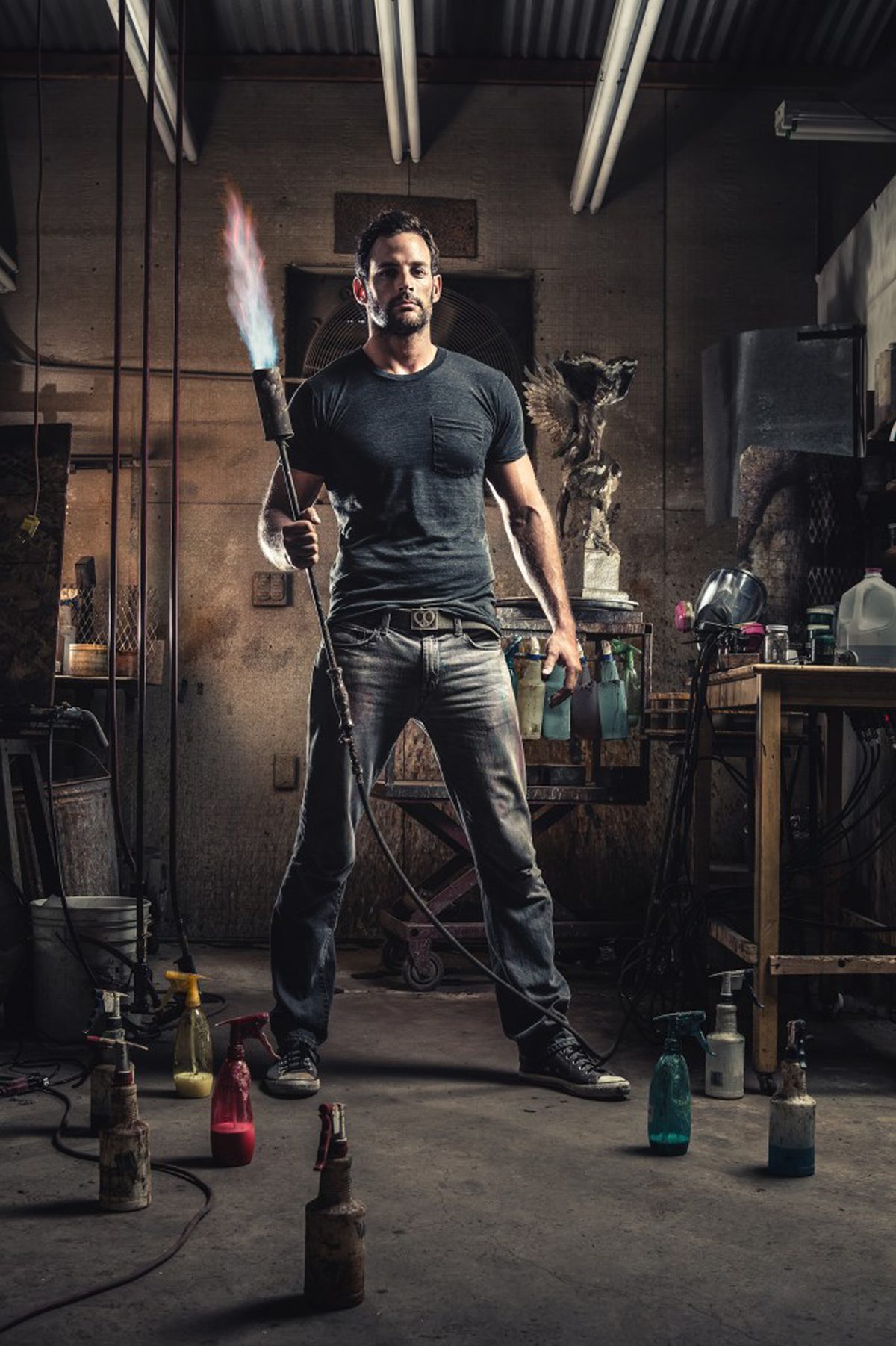
At Rowe, that trust runs in the family — literally. The patinas on Ken Rowe’s, Kim Kori’s, and Joel Petersen’s bronzes are all the work of master patineur Erik Petersen — Joel’s son, and a wildlife sculptor in his own right, whose own bronzes stand in the gallery wearing colors he coaxed out of the metal himself. Father and son work side by side at The Bronze Age in Prescott, where Erik has spent three decades learning to read hot metal.
Four artists’ bronzes, one torch — every patina in this story is Erik Petersen’s hand.
Watch It Happen, Live
On First Friday, September 4, Erik Petersen brings his torch to the gallery floor at Rowe Fine Art Gallery in Tlaquepaque — a live patina demonstration from 5 to 6pm, during “Last Call” for Summer Color (4–7pm). The final step in the making of a bronze, performed in person.
See All Upcoming EventsMore from The Journal · How a Painting Comes to Life in Reverse